

|
|||||
|
|
|||||
|
|||||
|
Extra phone security with a single swipe.🔒 |
|||||
Phone thieves don’t just want your phone; they want access to your bank accounts, documents and identity. But by taking a few simple actions, you can slow down the thieves and add an extra level of security to your device, all in under 30 seconds.
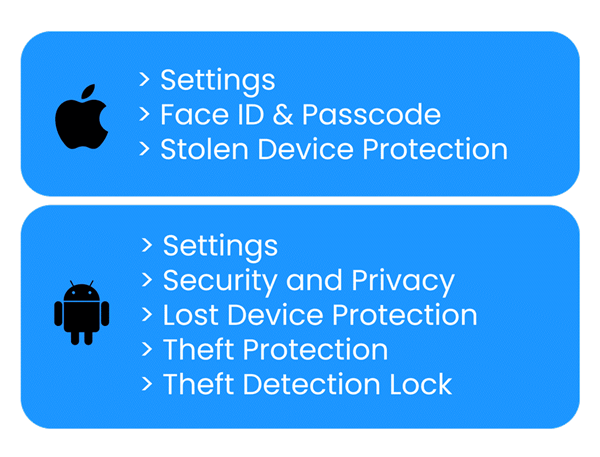
Activate anti-theft protectionWhichever phone you use, it is quick and easy to activate your phone’s in-built anti-theft protection. For iPhone users, Stolen Device Protection provides an additional level of security when someone tries to access sensitive features or settings from an unfamiliar location by requiring Face ID. Android users should enable Theft Detection Lock which uses sensors to detect motion patterns that suggest theft (like sudden snatching) and can lock your device immediately.
Take further security stepsThere are some other simple steps that you can take that make it much harder for criminals to access the contents of your phone if it is stolen. Taking these steps now could save you a lot of time, money and hassle in the long run! 1. Keep your software updated Install manufacturer and app updates as soon as possible to ensure that your phone always has the best protection and security. Ideally set your phone to update automatically in your settings menu. 2. Control your access settings Lock your phone when you’re not using it and set the auto-lock to activate itself after a short period of time. Make it harder for thieves to ‘shoulder-surf’ your login information by using biometric authentication and strong passwords instead of 4-digit passcodes. 3. Protect your personal information Think about whether apps containing sensitive personal information (e.g. banking apps) need to be on your phone at all - some may be better kept on a tablet or other device that you don’t routinely carry with you. Also try to avoid storing photos of personal information including your ID documents (passport, driving license) on your phone – these can be used by criminals to apply for loans or get round security protocols. Secure any apps which contain your personal or financial information (such as email, payment or banking apps) with strong, separate passwords which are different to your phone’s access passcode. On iPhone, activate biometric protection or hide apps that contain sensitive financial information – access this with a long press on the app’s icon. You can also protect photos of sensitive information by pressing them and select ‘hide’. On Android, protect apps and files (including photos of ID) by moving them to your Secure Folder. Don’t store PIN numbers, passwords or information about financial accounts in a ‘notes’ app. Lock notes which contain other personal information by pressing and holding on the note. For advice on how to create strong passwords, and further guidance on what you should do if you fall victim to fraud or cybercrime you can find more information in The Little Guide series. 4. Be aware of your surroundings Be mindful of who’s around you when you’re using your phone in public, particularly when entering your PIN number or passcodes. Avoid entering personal information in a public space wherever possible. Never give your phone to people you don’t know, particularly if you have just met them. Thieves may ask to borrow your phone or offer to enter their number – don’t let them. 5. Turn off message previews Turning off message previews can prevent thieves from seeing messages on your screen from your bank, or other secured platforms, about reset or login codes when your phone is locked. 6. Get your IMEI number Your phone’s IMEI can help you track it down if it’s lost or stolen. You can get your IMEI number by typing *#06# on your phone keypad. Keep a note of it somewhere other than your phone. Your network operator can use the IMEI number to block your device if it is reported stolen.
| |||||
Reply to this message | |||||
|



|