

|
||||
|
|
||||
|
||||
|
Should I Carry a Knife? |
||||
Knife Crime: The Dangers and Consequences of Carrying a Knife
West Midlands Police is reminding people across the region about the serious dangers and consequences associated with carrying a knife. Knife crime can have devastating and lasting effects on individuals, families and communities. Carrying a knife does not make someone safer. Instead, having a weapon can increase the risk of a situation escalating and can result in serious injury or loss of life.
Carrying a knife can change lives foreverA moment of anger, fear or poor judgement can have consequences that last a lifetime. When a knife is present during a confrontation, there is an increased risk that it will be used, whether deliberately or during a struggle. The impact of knife crime extends far beyond those directly involved. Families can lose loved ones, victims can be left with life-changing injuries, and communities can experience lasting fear and trauma. Young people can also put their own futures at risk by choosing to carry a weapon. A criminal conviction can affect education, employment and other opportunities later in life.
The law on carrying knivesIt is illegal to carry most knives or weapons in public without a lawful reason. There are limited exceptions, including certain folding pocketknives, but restrictions apply. Police officers have powers to investigate suspected weapons offences, and anyone found unlawfully carrying a knife could be arrested and prosecuted. Possession of a knife or offensive weapon can lead to serious criminal penalties, including imprisonment. The consequences can become even more severe when a weapon is used to threaten or injure another person. Even if someone carries a knife because they believe they need it for protection, this does not automatically provide a lawful reason for possessing it.
Carrying a knife does not provide protectionSome people may carry weapons because they are frightened or believe others around them are armed. Carrying a knife, however, can make an already dangerous situation significantly worse. A weapon can be taken and used against the person carrying it. Arguments that might otherwise end without serious injury can escalate rapidly when a knife is involved. The safest option is not to carry a weapon.
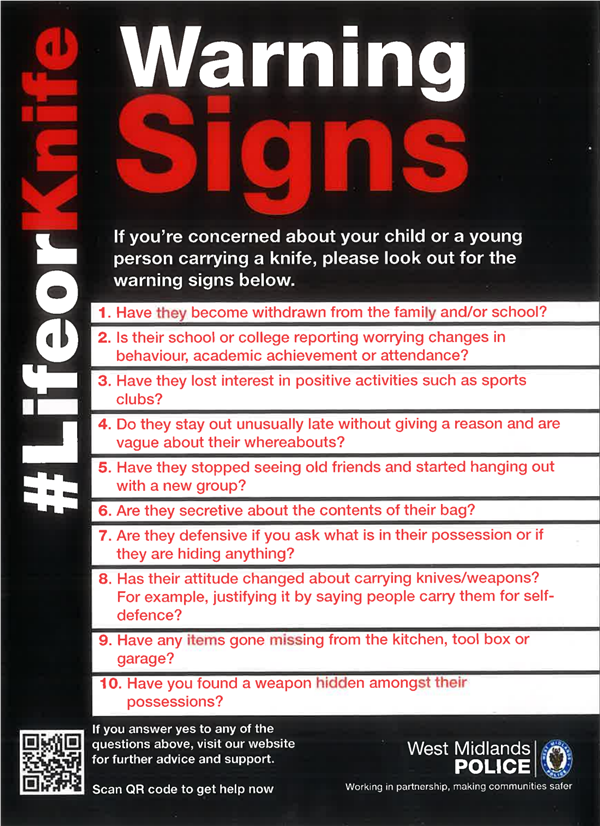
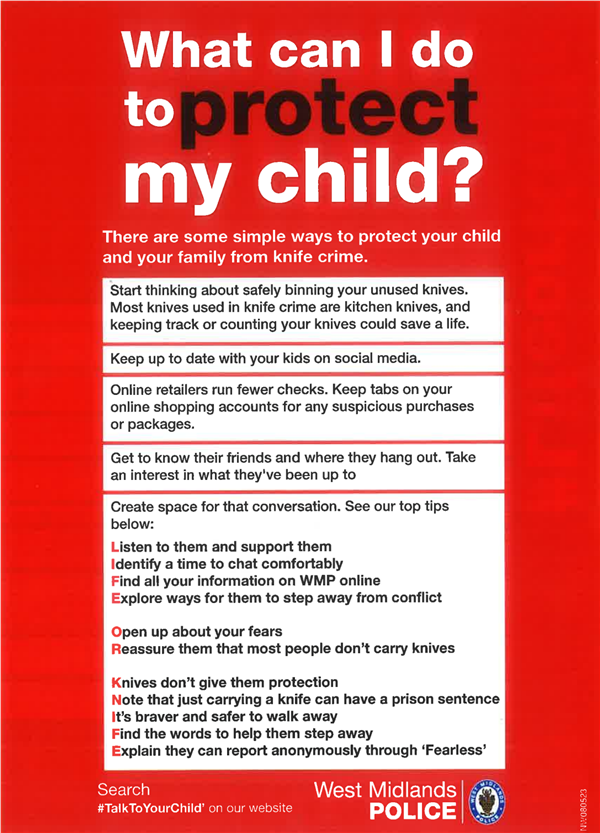
Preventing knife crimeWest Midlands Police continues to work with communities, schools, local authorities and partner organisations to prevent violence and tackle those responsible for carrying and using weapons. Prevention is also about understanding why someone may feel they need to carry a knife and helping them find a safer way forward. Parents, carers, teachers, friends and community members can all play an important role by recognising concerns and encouraging young people to seek support. Anyone worried that somebody they know is carrying a knife should take the concern seriously and seek appropriate help rather than confronting an armed person themselves.
Help keep our communities safeReducing knife crime requires communities and police to work together. Information about people carrying weapons can help police intervene before somebody is seriously injured. If there is an immediate danger or a crime is taking place, call 999. Information about knife crime and other offences can also be reported to West Midlands Police through the appropriate non-emergency reporting channels. Every knife taken off the streets removes the potential for it to be used to cause harm. Choosing not to carry a knife could protect your future and, ultimately, save a life. | ||||
Reply to this message | ||||
|


|