|
Here’s a quick update on anti-social behaviour locally. We know it can be distressing, but we’re working closely with partners to make the area safer and support residents.
Section 59 notices – Police powers to challenge Vehicle ASB and their owners.
This email is to update ward members and inform regarding ASB section 59 notices, which we will be using to challenge current concerns around vehicles and persons causing ASB.
With the recent change in legislation, it is important that the public is aware of the powers available to police to tackle anti-social vehicle use and help keep communities safe.
Updated Police Powers to Tackle Anti-Social Vehicle Use - Police officers and Police Community Support Officers (PCSOs) have powers under Section 59 of the Police Reform Act 2002 and the Crime and Policing Act 2026 to deal with the anti-social use of mechanically propelled vehicles.
These powers apply where vehicles are being used in a manner that causes, or is likely to cause, alarm, distress or annoyance to members of the public. Examples may include dangerous or inconsiderate driving, off-road vehicle nuisance, and other forms of anti-social vehicle use affecting local communities.
Effective from 29 June 2026 - Section 8 of the Crime and Policing Act 2026 has introduced a significant change to vehicle seizure powers.
Previous position:
• Officers were required to issue a Section 59 warning before a vehicle could be seized. New position (from 29 June 2026):
• The requirement to give a prior Section 59 warning has been removed.
• Where the legal threshold is met, officers may now seize a vehicle immediately.
• This change strengthens the ability of police to respond swiftly to anti-social vehicle use and protect local communities from nuisance and harm.
What This Means for the Public
Anyone using a mechanically propelled vehicle in a manner that causes alarm, distress or annoyance to others may be at risk of having their vehicle seized without prior warning, provided the legal criteria are met.
Police will continue to use these powers proportionately and appropriately, ensuring they are applied in line with legislation and operational guidance.
Following a Section 59 seizure, the vehicle is usually removed to a police-authorised recovery operator for storage pending recovery by the owner. The owner will normally be given information explaining why the vehicle was seized and what steps must be taken to recover it.
To recover the vehicle, the owner may be required to:
• Prove ownership of the vehicle.
• Provide valid identification.
• Produce a valid driving licence (where applicable).
• Provide evidence that the vehicle is insured and road legal.
• Pay any prescribed recovery and storage charges.
If the vehicle is not recovered vehicles that are not collected within the prescribed period may be disposed of, including being sold or destroyed, depending on the circumstances and applicable regulations.
Other consequences
Vehicle seizure does not prevent officers from taking additional action where appropriate. Depending on the circumstances, anti-social driving may also lead to:
• Traffic offence reports.
• Fixed penalty notices.
• Prosecution for road traffic offences.
• Seizure under other legislation if relevant offences are identified.
In short, officers can seize vehicles immediately where they are being used in a manner causing alarm, distress or annoyance. Once seized, owners face recovery costs and the risk of losing their vehicle altogether if it is not reclaimed.
The SNT will be working to utilise these powers where applicable to support challenging and dealing with persistent ASB caused by Vehicles.
Thank you for your continued support.
Regards
South Norwood SNT.
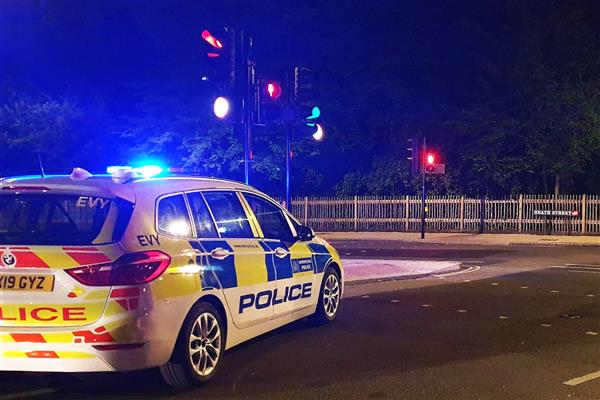 Across London we’ve put hundreds more officers on the frontlines of community crime-fighting teams, upping visible patrols in the right ‘hot spots’ so we can deter and catch criminals - including with new tech like live facial recognition cameras, drones and e-bikes. Antisocial behaviour can come in many forms and can require support from more organisations than just the police. A full list of what we categorise as antisocial behaviour is available on our website. If you have experienced anti-social behaviour or have information regarding an incident, please report it using our online reporting tools at https://www.met.police.uk or call the non-emergency number 101. Alternatively, you can stay 100% anonymous by contacting the independent charity Crimestoppers on 0800 555 111 or via their untraceable online form at www.crimestoppers-uk.org Please consider getting involved by registering for these messages, this will enable you to contribute to the local priority survey. We may be unaware of issues that you would like us to focus on. Take a few minutes to securely and privately register and have your say using the button below, this will mean we can focus on things that matter to you. 
Please click here to complete the survey
|