Theft of motor vehicles - headlight method and key emulation
Theft of motor vehicles - headlight method and key emulation
Recent reports have highlighted two methods of stealing cars. One is key emulation and the other is headlight hacking (CAN bus theft). The below is quite lengthy please read on to learn about methods of stealing vehicles which may effect your vehicle.
Key emulation works in a similar way to relay theft, by tricking your car into thinking your car key is present or being used.
Modern cars use electronic keys that communicated with the car via a radio frequency. Thieves use a special device that hijacks that frequency and pretends to be the real key. The devices they use can sometimes be disguised as something else, like a speaker. Once they've used it to trick the car into thinking the real key is present, allowing thieves to unlock the doors, start the engine and drive away.
CAN bus theft is sometimes known as headlight hacking, as thieves can get in through the headlight as another type of keyless theft, where a thief steals a car or van by hacking into the car's computer. It's different depending on what make and model of car you have - they could hack in through another weak spot just as easily for example the tail lights.
CAN bus refers to the Controller Area Network (CAN) Bus system in your car. It might sound complicated, but it's just your car's computer. It controls things like the engine and safety features.
Thieves use your headlight's weak spot to access your car's computer
Put in false commands, like turning off the immobiliser and bypassing the keyless entry system
override your security systems so the car thinks the keyless entry has been turned on, the doors are unlocked and the thieves are free to drive away.
This specific vulnerability has been affecting a range of Toyota and Lexus vehicles, including models like the Lexus RX, Toyota C‑HR, RAV4, and others.
This method bypasses traditional protections like key-signal bocking (Faraday Pouches) since the attack doesn't involve key cloning but direct physical access to the wiring.
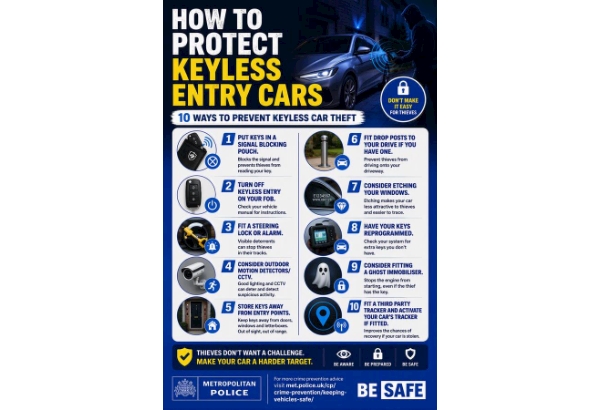
Please consider taking the following steps to keep your vehicle safe:
Check that your vehicle is locked and secure every time you leave it. Thieves often look for easy opportunities to steal from vehicles. They will usually try the handles until they get lucky and find one that has been left unlocked.
Keep your keys safe, out of view when at home and away from your front door.
If you have a keyless entry vehicle, keep the key well away from the vehicle while at home and turn off wireless signals on your fob when its not being used. Consider putting the keys in a screened or signal blocking pouch, such as a Faraday Bag and check that it is still working every few months as the pouches car wear.
Fit a good high quality steering lock.
Consider fitting an after market secondary immobiliser I.E. a ghost immobiliser which blocks unauthorised engine start up even if thieves access the vehicle's network and requires a manual PIN.
Please activate a manufacturer fitted tracker if your car has one.
Please fit a third party tracker if you don't have a manufacturer fitted one and also if you do as thieves often target the manufacturer's one.
Have your keys reprogrammed and check you have all the keys in the vehicle's computer. Get any you don't have deleted from your vehicle's computer.
Park your vehicle in a private garage if you can. If you don’t have access to one, try to park in a well –lit open space.
Consider fitting drop posts to your driveway if you have one.
Consider fitting a wheel clamp.
Have a conversation with your car's manufacturer to make sure your car has the latest security updates. In some cases manufacturer's have started offering wheel-well protection to block access to wiring.
Please share the above message with your road's WhatsApp group, local community group, etc. Let's make it more difficult for thieves to steal vehicles.