
Laws around Electric Bike Ownership

|
||
|
|
||
|
||
|
Laws around Electric Bike Ownership |
||
You can ride an electric bike if you’re 14 or over, if it is an ‘electrically assisted pedal cycle’ (EAPC). You do not need a licence to ride an EAPC, and it does not need to be registered, taxed or insured.
When your Electric bike (EAPC) is Legal An EAPC: must have pedals that can be used to propel it can have more than 2 wheels, for example a tricycle It can be propelled up to 15.5mph without pedalling but only if it’s been approved. Its electric motor: must have a ‘continuous rated power’ output of no more than 250 watts must not be able to propel the bike when it’s travelling at more than 15.5 miles per hour (mph) What your Electrically assisted Pedal Cycle (EAPC) must show to be legal. Markings on the bike must show both: the continuous rated power output the bike manufacturer It must also show either: the battery’s voltage the maximum speed the motor can propel the bike
Where you can ride an EAPC If your bike is an EAPC then you can ride it on cycle paths and anywhere else pedal bikes are allowed.
You CANNOT ride it on pavements.
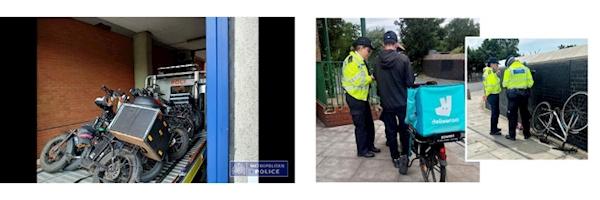
When your bike is not an EAPC If your electric bike does not meet the EAPC rules, then it’s classed as a motorcycle or moped and is not legal. Your bike is NOT an EAPC if it: can be propelled at more than 15.5 miles per hour (mph) by the motor has a continuous rated power output higher than 250 watts does not have pedals that can propel it
If your bike is not an Electrically assisted Pedal Cycle (EAPC) If your electric bike is not an EAPC it must be registered and taxed. You need to: wear a motorcycle helmet that meets British safety standards
| ||
Reply to this message | ||
|


|